
Heritage stories
Sylvia Tracey
Nurse, NHS · arrived from Trelawny Jamaica
Would you like this read to you? Just press play below.
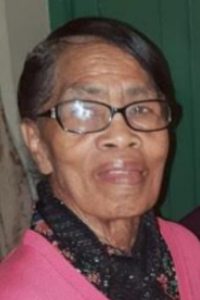
Sylvia Eugenie Tracey (born 4 October 1928 in Ulster Spring, Trelawny, Jamaica) offers a poignant and optimistic reflection on her childhood in Jamaica and her migration to England in the early 1950s, where she contributed to the National Health Service (NHS) through several years of domestic cleaning work at King’s College Hospital in London. As the youngest of five children born to Alfred and Rosyln Ferguson, she described her upbringing as an “amazing childhood,” filled with simple joys: “I enjoyed going to school, playing with my friends and siblings, picking mangoes on the way to and from school.” Before leaving Jamaica, she worked as a hairdresser, a trade that demonstrated her practical skills in a close-knit rural community.
In her early twenties, Sylvia was inspired to migrate by letters from two older siblings already in England. These letters, collected from the local post office and often containing money for the family, vividly described her sister’s adventures: “visiting Buckingham palace, Trafalgar Square, London Bridge, and other sights.” Reading them aloud to her mother, she recalled, “Every time I read her letters aloud to my mother, I would dream of one day living in England myself, not knowing that one day this will be a reality.” With all four siblings having left home, she flew to Gatwick Airport, her first aeroplane journey arriving “so nervous and felt home sick already.” The contrast was immediate and striking: “As soon as I stepped off the plane, I was struck by how cold, grey, foggy and crowded everything was.” She mistook terraced houses for “one big building” and chimney steam from coal fires for something industrial, noting, “My sister explained it was from the coal fires people used to heat “their homes — England was a much colder country”. than I was used to.
Eager for employment the day after arrival, Sylvia encountered overt racism when inquiring about a shop job advertised in the window: “the shop assistant sharply told me that he does not employ black people.” Shocked, she “walked away immediately and continued to look for other jobs.” She secured work in a factory producing vinegar and beetroot but disliked the experience: “I worked very long hours, and :”I came home smelling like vinegar every day”, which I did not like.” Her expectations of England were high “I thought people would be friendly, and that there would be opportunities to become whatever you wanted to be” yet she acknowledged, “That wasn’t always the reality, but I was determined to create a good life for myself.”
Through her sister’s recommendation, Sylvia soon obtained a cleaning position at King’s College Hospital. Her initial impression was of scale and uncertainty: “My first impression of the NHS was that it was a huge organisation, with many people working in this organisation I wondered how I would fit in.” She quickly adapted, working early mornings and night shifts cleaning wards, doors, bathrooms, and toilets, often assigned to specific floors or sections. She enjoyed the teamwork “I liked being part of the team” and formed “long lasting friendships” with other women from different parts of the Caribbean. While she “didn’t encounter as much blatant racism as some of the nurses and auxiliary staff did,” she conceded, “Still, it wasn’t always easy,” yet she took pride in her work and “in being part of something meaningful.”
Her original intention was temporary: “The plan was to work in England for 5 years, save and go back home to buy a house in Jamaica.” However, she adapted over time, met her husband, raised three children, and made England her permanent home. She has visited Jamaica on holiday but reflected, “England became my home. I have been here for over 70 years, and soon it will be my 97th birthday. At the same time, she expressed enduring nostalgia: “I still miss Jamaica, the warmth, the people, the food, and the environment, which I reminisce a lot about and also my childhood “growing up in Jamaica.” She concluded, “I shall hold on to the fond memories forever.”
Sylvia’s narrative aligns with the Windrush generation’s broader experiences: family-driven migration in the 1950s to fill essential labour shortages in the expanding NHS, often in low-status but indispensable domestic cleaning roles that ensured hospital hygiene and operations. Her account emphasises initial shock and prejudice, resilience in overcoming barriers, pride in teamwork and meaningful contribution, and eventual settlement despite unmet romanticised expectations. Unlike clinical nursing pathways, her supportive role highlights the foundational, frequently under-acknowledged labour of Caribbean women in sustaining the early NHS while forging new lives amid societal challenges.