
Heritage stories
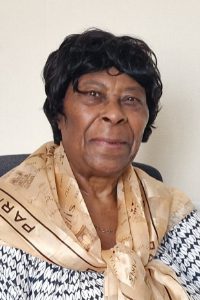
Sylvia McDonald
Nurse, NHS · arrived from the Caribbean, 1961
Would you like this read to you? Just press play below.
When Britain faced a shortage of nurses after the Second World War, recruitment campaigns extended across the Commonwealth. Thousands of young men and women from the Caribbean answered the call. They left behind families, familiar communities and tropical climates to travel thousands of miles to a country many knew only through stories, photographs and schoolbooks. Among them were Doreen Quammie, Ilene Chigwende, Tara Lawrence and Myrtle McDonald. Their journeys were different, but they shared a determination to build new lives while contributing to the health service that urgently needed them.
Doreen Quammie grew up in Montego Bay, Jamaica, and remembers her childhood as a happy and secure one. Her family owned property that had been passed down through generations, and her father ran a successful business. School, church and family life shaped her early years. Looking back, she remembers a town that was vibrant and thriving, where people dressed smartly and took pride in their community.
Ilene Chigwende also grew up in Jamaica, one of seven children in a close-knit family. Summers were spent playing with cousins, making dolls and enjoying the freedom of childhood in the countryside. Church was central to family life. By her early teens she was teaching Sunday school classes and taking on responsibilities within her congregation. She was academically successful too, passing examinations earlier than many of her peers.
In Siparia, Trinidad, Tara Lawrence was raised in a household that valued education and faith. Her father worked for Texaco and family life revolved around school, church and learning. One of her strongest memories is of Sunday lessons that encouraged children to imagine a wider world beyond their immediate surroundings. Those early experiences nurtured a curiosity that would eventually take her across the Atlantic.
Myrtle McDonald’s childhood in Jamaica was equally grounded in family, faith and community. She excelled at school and passed the First, Second and Third Jamaican examinations. Although her family was not wealthy, she remembers a warm and supportive environment where relatives looked after one another and children were taught the importance of kindness and responsibility.
Like many young Caribbean people during the 1960s, all four women began to look beyond their islands for opportunities. Britain offered the chance to work, train and build a future. For Tara, nursing was particularly attractive because it allowed her to earn while she trained. Nursing education in America was expensive, but in Britain student nurses received a wage. Ilene’s path was influenced by her father, who had already migrated and later sent for her. Myrtle hoped to improve her prospects and help support her family. Doreen followed her husband, who had arrived in Britain several years earlier.
Arriving in Britain was both exciting and unsettling. For many Caribbean migrants, the journey itself was a major adventure. Ilene remembered the mixture of anticipation and uncertainty she felt travelling to a country she had never seen before. Tara arrived in November 1968 and immediately encountered a climate unlike anything she had known in Trinidad. Doreen recalled being advised not to bring sandals because the roads in England would not be suitable for them. When she arrived she quickly realised that advice had been unnecessary. Yet the rows of terraced houses she saw from the train were unlike anything she had known in Jamaica. Her first impression was that they looked more like prisons than homes.
For Myrtle, the hardest part was leaving family behind. Like many migrants of her generation, she travelled with hope but also with sadness. The move required enormous courage. Communication was slow, travel home was expensive and there was no guarantee of returning regularly to see loved ones.
The nurses’ homes where many overseas recruits lived offered both support and discipline. Curfews were enforced, residents signed in and out, and matrons closely monitored behaviour. Yet these homes also provided companionship and security. More experienced Caribbean nurses often helped newcomers adjust to British life, offering practical advice and emotional support. For many young women arriving alone in a foreign country, those friendships became invaluable.
Training within the NHS opened doors, although opportunities were not always equal. Many Caribbean recruits entered State Enrolled Nurse training before progressing to State Registered Nurse qualifications. The distinctions were not always explained clearly, and progression often depended on encouragement from senior staff.
Myrtle remembered an Indian doctor who advised her that promotion opportunities would be limited unless she pursued SRN training. At the time she did not fully understand what he meant, but she later recognised the value of his advice. After qualifying as an SEN, she continued her studies, became an SRN and later completed her midwifery training. It was a path that required determination, but it opened opportunities that might otherwise have remained closed.
Tara followed a similar route. Although she initially trained as an SEN, she later advanced her qualifications and became a staff nurse. She was proud of her uniform and proud of what nursing represented. It offered independence, stability and a respected professional identity.
Doreen trained as a State Registered Nurse before moving into midwifery. Working with babies on children’s wards sparked a desire to learn more. Midwifery training gave her the confidence and knowledge she felt she needed when caring for newborn infants. During her training she discovered a passion for neonatal nursing and decided to remain in that speciality. It was a decision that would shape the rest of her career.
The women encountered racism throughout their working lives. Sometimes it appeared in subtle ways. Mistakes made by Black nurses could be judged more harshly than those made by White colleagues. At other times the prejudice was explicit. Some patients requested not to be cared for by Black nurses or midwives. Tara remembered occasions when visitors ignored her professional role and directed questions to White staff instead.
Yet none of the women allowed such experiences to deter them. They responded through professionalism, competence and persistence. Respect was earned through hard work and high standards of care.
Family responsibilities added another layer of challenge. Without grandparents, aunts and extended family nearby, Caribbean nurses often relied on their immediate families and close friends. Doreen completed further training while raising children. Balancing shift work, study and family life required careful organisation and determination.
As her career progressed, Doreen became a senior figure in neonatal nursing. After working successfully at New Cross Hospital, she was encouraged to apply for a leadership position in Dudley. Initially she resisted. She enjoyed her work, lived close to the hospital and saw little reason to move. Eventually, however, she accepted the challenge.
Arriving at Dudley was a culture shock. The neonatal unit lacked the diversity she had experienced elsewhere, and some clinical practices were outdated. Doreen was determined to improve standards. She introduced stronger infection-control procedures, expanded staff training and encouraged nurses to develop their skills. Not everyone welcomed the changes. Increased spending on equipment and education prompted questions from management, but Doreen remained firm in her belief that investment was necessary to provide the best care.
Gradually the unit changed. Standards improved, confidence grew and the neonatal service developed a strong reputation throughout the West Midlands. Babies were transferred there from other hospitals when specialist care was required. Staff developed new skills and the unit became recognised for the quality of its work.
Among the nurses who contributed to that success was Ilene Chigwende.
By the late 1990s, Ilene was working in neonatal intensive care. One morning she arrived at work to discover that two premature babies had developed painful skin damage after adhesive tape had been removed from their faces. The tape had been used to secure feeding tubes, but removing it had stripped away the fragile surface of their skin.
The sight troubled her deeply.
“There must be something better than this,” she thought.
Rather than accepting the problem as unavoidable, Ilene decided to investigate. With the support of her manager, she enrolled on a skin-care course. Although neonatal skin care was not part of the programme, she chose to focus her research on the needs of premature babies.
At the time there were few guidelines available. Much of the work had to be done independently. Ilene searched libraries, consulted journals and contacted sources in the United States. She spent countless hours gathering information and developing a practical approach that could be used in everyday clinical care.
Her research led to the creation of a comprehensive neonatal skin-care plan. It addressed both prevention and treatment, focusing on how fragile skin could be protected before damage occurred and how injuries could be managed when they did happen. Working closely with a pharmacist, she introduced the use of Duoderm Extra Thin, a protective barrier that could be placed between the baby’s skin and the adhesive tape securing feeding tubes.
The results were remarkable.
Instead of attaching tape directly to the infant’s skin, nurses applied the protective layer first. Skin damage reduced dramatically. Visiting nurses from other hospitals immediately noticed the difference. Some were astonished that such a simple change could have such a significant impact on patient care.
Word spread quickly. Nurses from neighbouring hospitals began asking questions about the practice. Requests arrived for copies of the skin-care plans. Before long, Ilene discovered that her work had travelled far beyond Dudley.
The breakthrough should have been a career-defining achievement. Instead, it became one of the greatest disappointments of her professional life.
Her neonatal skin-care plan was reproduced elsewhere and incorporated into wider neonatal guidance without proper acknowledgement. The work appeared, virtually word for word, in a regional neonatal formulary used across the West Midlands. Although her research had become the foundation for the guidance, her name was absent.
The experience became even more painful when she attended a professional lecture and heard someone presenting her work as if it were their own. Sitting in the audience, she listened as the speaker described the very practices she had spent years researching and developing.
Eventually she raised her hand.
“Excuse me,” she asked, “where did you get that information?”
The answer came: “From the neonatal unit.”
“I’m sorry,” she replied, “but that is my work.”
Even years later, the memory remained upsetting. Yet despite the lack of recognition, Ilene took pride in knowing that her innovation had improved care for vulnerable babies across the region. Long after her retirement, the principles she introduced continued to be used in neonatal units.
Her story reflects a wider truth about many Caribbean nurses. Their contributions were often significant but not always acknowledged. Much of their influence can be found not in awards or titles, but in the standards they established, the patients they cared for and the colleagues they inspired.
For Myrtle, one of the most important aspects of nursing was helping others develop. As she progressed into senior roles, she believed experienced staff had a responsibility to support those coming behind them. Good leadership, she felt, involved sharing knowledge and creating opportunities for others to succeed.
Tara remembered the realities of working on understaffed wards, particularly during night shifts. Caring for large numbers of patients with limited support was demanding, but she remained proud of the care she provided and of the career she built.
Throughout their working lives, all four women witnessed enormous changes within the NHS. They saw services expand, technology improve and opportunities increase. They also saw the workforce become more diverse, thanks in part to the contribution of generations of Caribbean nurses.
Looking back, they remain proud of what they achieved. They cared for patients during difficult times, overcame barriers and helped raise standards of care. Their contribution was not always recognised, but its impact can still be felt throughout the NHS today.
The stories of Doreen Quammie, Ilene Chigwende, Tara Lawrence and Myrtle McDonald are stories of courage, commitment and service. Together they represent a generation whose dedication helped shape British healthcare and whose legacy continues in the nurses, midwives and healthcare professionals who followed in their footsteps.