
Heritage stories
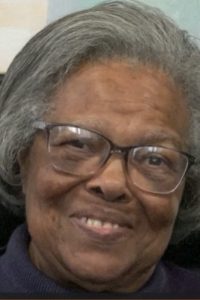
Sonia Peters
Nurse, NHS · arrived from Jamaica, 1963
Would you like this read to you? Just press play below.
Sonia was born on 25 April 1944 in Kingston, Jamaica, and grew up in a warm, loving family where she spent joyful summers with her grandparents. Their garden was full of mango, banana, lemon, and coconut trees. Sonia loved picking the fruit and sliding down hills on palm leaves from the coconut trees. She would sit under those trees for hours, telling stories to her friends and laughing together; those were truly happy days. From a young age, she was drawn to helping others. At school, she always knew she wanted to care for people, and felt a deep calling towards nursing, believing it was the best way she could make a real difference in people’s lives. Nursing also appealed to her because it could take her beyond Jamaica, giving her the opportunity to see the world. She made a five-year plan: train in England, work there, then specialise in paediatric nursing in Africa. Her parents worked hard to make that journey possible.
In 1963, at the age of 18, Sonia flew to England alone for the first time on a plane. Feeling a mixture of nervousness, excitement, and fear, arriving during one of the coldest winters England had ever seen, and the chill was a complete shock to my system. I stayed briefly with relatives in Forest Gate, Stratford, in London, to help me adjust. Everything felt so different: the young women wore makeup and short skirts, which was very unlike life back home. In April 1963, She started my three-year State Registered Nurse (SRN) training at Central Middlesex Hospital. As a student nurse from abroad, she lived in the nurses’ accommodation, which came with strict rules for doors to be locked after curfew, confrontations with the matron if you were late, and sometimes relying on friends on the ground floor to let me sneak back in.
Training was demanding. Student nurses did a lot of the real work, often the most menial tasks, in an era when nursing could feel monotonous, and respect was not always given. But the hardest part was the racism and discrimination. Caribbean nurses had to constantly prove themselves, work twice as hard and endure degrading comments. In lectures, we were often ignored or ridiculed. She remembers giving a correct answer only to be dismissed, then hearing a white student repeat it and being praised. Some patients, meeting people of colour for the first time, showed shocking ignorance: one woman thought the Caribbean nurses had tails, lived in treehouses, and wore grass skirts. Others mocked their accents, and even colleagues sometimes spun them around, half-joking that they have tails. These experiences were incredibly disheartening, especially when caring for people at their most vulnerable time, yet our efforts were rarely acknowledged. Outside work, Caribbean nurses formed support networks, though only about half of us found real comfort in them, the rest carried the heavy weight of racism and exclusion alone.
After qualifying in 1966, she worked on a general medical ward, which she found fulfilling despite painful moments, like a patient telling her, “Move your black hands off me.” she gained valuable experience on children’s wards too. Later, marriage to a military man took her to Colchester, where she felt isolated as the only family of colour in the area, raising three children and making do with whatever food she could find, Irish potatoes, carrots, and improvising Caribbean dishes to the best of her ability.
In the early 1970s, settling in Wolverhampton, she worked on general wards at New Cross Hospital, doing both night and day shifts. In 1979, she began health visitor training and qualified in 1980. As a health visitor in Bilston, she served disadvantaged communities. Despite an unexplained complaint from a GP once, patients kept seeking her care. She noticed gaps in services and developed a child health clinic within a GP surgery. It quickly grew, became popular, and made a real difference.
Working in the community, she noticed how healthcare overlapped with housing, education, and disability needs. Bringing representatives from each area together, she organised, and chaired multi-disciplinary team (MDT) meetings to share knowledge and coordinate better care. Often the only person of colour in the room, but she stayed focused on serving the community. Those meetings became highly successful and positively impacted many lives. Sonia also wrote a thesis on community nursing needs, although never received formal recognition. It was later used as a reference to improve community-based care. She initiated collaborations with Bilston College, giving talks and lectures to students.
Looking back, my career in the NHS was shaped by both challenges and determination. The racism was real and painful, yet the work itself, caring for patients, building clinics, uniting professionals, was deeply rewarding. Like many Caribbean women of my generation, she came to fill a need in the health service and stayed to give more than was ever asked, transforming care through skill, advocacy, and quiet resilience. The NHS gave her a purpose and a home, and was very proud of the contribution made.