
Heritage stories
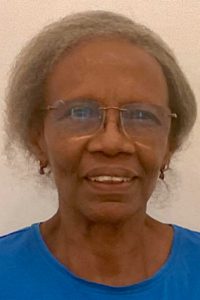
Professor Melhado Chevannes
Nurse, NHS · arrived from the Caribbean, 1964
Would you like this read to you? Just press play below.
Professor Melhado Chevannes’ journey in the National Health Service is a compelling story of determination, professional excellence, and advocacy. It unfolds against the backdrop of post-Windrush migration and the racial challenges of mid-century Britain.
She was born on the eleventh of March, 1944, in Bog Walk, Saint Catherine’s Parish, Jamaica. She grew up in a family shaped by her mother’s entrepreneurial spirit as a shopkeeper and tailor. This environment instilled strong values of perseverance, kindness, and persistence. Her mother often stressed the need to know what you want, to remain decent, and to never give up at the first obstacle. After excelling at Government High School and completing her GCSE-equivalent qualifications, her early ambition to train as a teacher had to be postponed, because applicants were required to be at least eighteen.
In August 1964, at the age of twenty, Chevannes migrated to England with her brother. She came under the restrictive work voucher system then in place for Commonwealth citizens from the Caribbean. The voucher required immediate employment, so she began work the very next day, as an auxiliary nurse at Birmingham Accident Hospital. Her early duties were basic: bed bathing, and managing bedpans. Almost immediately, she encountered overt racism. A patient with a fractured femur kicked her and demanded that she remove her, quote, “black hands.” The incident was dealt with swiftly. Senior staff, including the ward sister and the doctor, firmly reprimanded the patient and upheld a zero-tolerance stance. It was an early sign of institutional support, even amid prejudice.
Driven to progress, Chevannes pursued formal nurse training. In 1965, she was accepted onto a three-year State Registered Nurse course, known as the SRN, at Selly Oak Hospital. During this time, she faced differential treatment compared with her white colleagues. For example, she was subjected to stricter scrutiny over her living arrangements when she sought permission to live with family, while white nurses were allowed far more independence. The training combined clinical practice with theory, covering human physiology, sociology, and public policy. This deepened her understanding of how social and economic factors shape health outcomes. She qualified as an SRN in 1968, and then specialised in midwifery. She valued its community-based approach, which brought her closer to healthy people, rather than only the ill.
Later, in 1972, she trained as a health visitor in Nottingham. There, housing discrimination became a significant barrier. Estate agents would often claim there were no vacancies once they learned of her Jamaican background. As a result, she had to rely on informal networks, and eventually on help from a tutor, to secure accommodation.
Chevannes’ career continued to advance through further education and leadership. She earned a Bachelor of Arts with Honours in Social Sciences from the Open University. She then completed a Master’s in Sociological Research in Health and Care at Warwick University, followed by a PhD from Keele University. She often studied part-time, alongside her work. In 1990, she was appointed Professor of Nursing at the University of Central Lancashire, becoming the first Black woman in the UK to hold a university chair in nursing. She also served as a non-executive director on NHS Trust boards in Lancashire and Leicester, and she later chaired the Royal Wolverhampton Hospitals NHS Trust. Beyond her clinical and academic work, she co-founded a voluntary supplementary school for Black children, to address the educational underachievement they faced in mainstream systems. She ran it for nine years, using church facilities.
Throughout her career, Chevannes faced persistent racism, including patient hostility, housing denials, and unequal professional treatment. Yet she consistently applied her core principle of resilience: experiences of prejudice should never halt your progress. Her contributions to the NHS spanned clinical practice, academic publications on health equity and multicultural nursing, and policy advocacy, such as her work promoting unrestricted visiting hours on children’s wards. In recognition of her service, she received a CBE in the 1999 Birthday Honours, for services to multicultural nursing. She became a Fellow of the Royal College of Nursing, and in 2022, a bust was unveiled in her honour, largely through the advocacy of her community and family.
Reflecting on her legacy, Chevannes highlights the profound impact of the Windrush generation on the NHS. She speaks of the importance of the allies who guided her amid discrimination, and of the ongoing need for both equity and kindness. Her path, from an auxiliary nurse arriving under restrictive migration rules, to a pioneering professor and board chair, illustrates two things at once: individual perseverance, and the broader structural change needed to support diverse healthcare professionals. Her advice to younger generations, and to Black individuals in particular, is this: seek out supportive networks, persist through the barriers, and stay committed to service, without ever growing complacent.