
Heritage stories
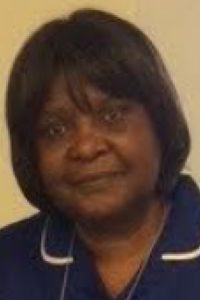
Paulette Morris
Nurse, NHS · arrived from the Caribbean, 1965
Would you like this read to you? Just press play below.
Paulette Morris was born on 28 July 1952 in the parish of Saint James, Jamaica. She grew up in a warm, extended family surrounded by grandparents, aunts, uncles, and cousins, in an environment she described as happy and carefree. From the age of four, she knew she wanted to become a nurse, inspired by a cousin who worked at the local clinic. Church played a central role in her childhood, particularly through her involvement in the Presbyterian Sunday school and community activities. When she was around 11 years old, her parents migrated to England, leaving Paulette and her younger sister with their grandmother while her older brother attended boarding school in Montego Bay.
On 5 March 1965, at the age of 14, Paulette travelled alone by aeroplane to London Heathrow. The transition from Jamaica’s warmth to England’s freezing winter was a profound shock, compounded by unfamiliar sights and smells such as smoky air, coal fires, thick porridge, and paraffin heaters. After landing in London, she travelled to Manchester by train where she was met by her parents before the family travelled back to Wolverhampton. At an all-girls secondary school (now closed), she was one of only six Black pupils. Despite achieving excellent marks in Jamaica and scoring 75–85% on placement tests, she was placed in the lowest academic stream. Some teachers and pupils displayed open hostility, yet a few members of staff Mrs Jones and the sewing teacher Mrs Armstrong along with one kind English classmate who walked her to the bus stop each day, offered welcome support.
At the age of 16, Paulette left school and enrolled in a two-year pre-nursing course at Bilston College. In 1970, at 18, she began formal nurse training at Worcester Royal Infirmary and qualified as a State Enrolled Nurse (SEN) in 1972. Her early placements included the children’s ward at Worcester Royal Infirmary and Ronkswood Hospital, where she worked under the supportive Sister Nash. She formed strong bonds with young patients, often returning off duty to comfort distressed children, earning deep gratitude from parents. After qualifying, she worked at Wordsley Hospital, which specialised in infectious diseases, before moving into operating theatre nursing. Within months she was assisting across all surgical specialisms, and just six months into her training she demonstrated composure and skill by taking decisive action during a cardiac arrest.
In the early 1970’s, Paulette joined the operating theatre team at Worcester Royal Infirmary on a permanent basis. She quickly excelled as a scrub and theatre nurse and, within 18 months, was promoted to senior theatre nurse. Surgeons, including Mr Hershman and Mr Kramer, placed great trust in her technical ability and reliability. Colleagues frequently persuaded her to remain whenever she considered leaving, and she stayed until 1988, eventually becoming team leader for five colorectal consultants. In 1988 she accepted a post in Saudi Arabia with an American company at a Ministry of Interior hospital, where she specialised in neurosurgery for four and a half years. The role offered exposure to advanced equipment and collaboration with staff from 32 nationalities, though the restrictive environment, including passport retention, proved challenging. She returned to the UK in 1992 following the sudden death of her cousin.
Back in England in 1993, Paulette worked briefly in Dudley and Worcester before taking a permanent position at New Cross Hospital in Wolverhampton in 1994, following the birth of her daughter. At New Cross she made significant improvements to theatre practices, including streamlining processes and reducing instrument set sizes for greater efficiency. She took charge of colorectal, urology, and general surgery lists. In the late 1990s she completed a conversion course to become a Registered General Nurse (RGN). In 2003 she spent 11 months in the Cayman Islands assisting with the commissioning of new operating theatres but returned early due to her young daughter’s distress at the separation. Promoted to Theatre Sister at New Cross, she mentored numerous staff and undertook advanced training, including courses in robotic surgery in France. She retired in 2016 after 46 years of continuous service in nursing.
Throughout her career, Paulette faced racial discrimination, including hostility from some teachers, colleagues, and patients during her early years in England. She also noted the increasing administrative burden in later decades. Nevertheless, she regarded nursing as a vocation rather than a job motivated by pay. She found profound satisfaction in patient care, theatre teamwork, and the opportunity to save lives through steady, skilled hands. She particularly cherished the camaraderie of her early years and the lifelong friendships that developed.
Family remained her priority. Major decisions returning from Saudi Arabia in 1992 and from the Cayman Islands in 2003 were driven by her daughter’s well-being. When she briefly left for the Cayman Islands, surgeons and theatre staff at New Cross organised an emotional farewell party, reflecting the high regard in which she was held.
Paulette Morris’s 46-year career exemplifies the dedication, skill, and resilience of many Caribbean nurses who joined the NHS during and after the Windrush era. From her early training in Worcester through senior roles in operating theatres and international experience, she consistently demonstrated professionalism, compassion, and a commitment to improving patient outcomes. Her journey from a determined young girl in Jamaica to a highly respected Theatre Sister in Wolverhampton highlights the vital contribution of African-Caribbean women to the development and ongoing strength of the National Health Service. Asked if she would choose nursing again, her answer remains a firm yes, underscoring a lifelong sense of vocation and pride in the care she provided.