
Heritage stories
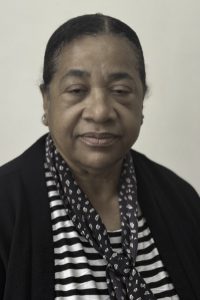
Margaret Dockery
Nurse, NHS · arrived from the Caribbean, 1961
Would you like this read to you? Just press play below.
Margaret Rose Dockery was born on 23 September 1955 in Kingston, Jamaica, the fourth of five children in a close-knit and lively family. She grew up immersed in Jamaican culture and strong religious influences, initially living with her parents and siblings. In 1960, when she was five years old, her parents migrated to England in search of better opportunities and settled in Sweetman Street, Whitmore Reans, Wolverhampton. Margaret and her siblings remained in Hanover, cared for by a Presbyterian aunt and a Church of God grandmother, experiencing dual religious environments through Presbyterian services and evening visits to her grandmother’s church. From around the age of ten, while playing with dolls, she developed a clear ambition to become a nurse aspiration her mother — an aspiration her mother actively encouraged and shared.
In April 1968, at the age of 11, Margaret travelled by aeroplane to England with two brothers and her younger sister to join her parents, leaving her eldest sister behind in Jamaica. Her expectations of a prosperous “land of milk and honey” were quickly tempered by the reality of cold weather and the sight of terraced houses, which she initially mistook for army barracks. Enrolling in school proved difficult; while her younger sister secured a place promptly, Margaret waited several months until a community worker known as “GI Joe” advocated on her behalf, enabling her to attend Old Fallings Lane School, a girls’ school. Her first day was challenging she missed her bus stop and arrived late, and she encountered subtle prejudice from some teachers through their tone and manner. Nevertheless, she formed a supportive friendship with another Black pupil who later became a barrister, an example that demonstrated what was possible. After the family moved to Bilston, Margaret transferred to Etheridge Secondary School, a mixed and less rigid environment with more Black students, where she felt more comfortable.
By the age of 15, finding school unchallenging, Margaret left with her parents’ support to pursue her long-held goal of nursing. In 1970 she enrolled in a two-year pre-nursing course at Bilston College. In 1972, at 17, she applied to several hospitals, passed the entrance examination at New Cross Hospital in Wolverhampton, and chose to train there. She began her State Enrolled Nurse (SEN) training in 1973, living in nurses’ accommodation under strict rules, including an immediate dismissal policy for pregnancy and a 9:00 p.m. curfew. Despite occasional minor issues such as missing food from shared fridges, she enjoyed the camaraderie, social outings, and sense of independence during this period.
Margaret qualified as an SEN in 1975, but the job market was difficult, with positions scarce for all newly qualified nurses. Initially uninterested in paediatrics, she swapped roles with another nurse and began working in the Ear, Nose, and Throat (ENT) theatre and clinic at the Royal Hospital, later transferring to New Cross. She developed strong skills as a scrub nurse and worked effectively under a notably strict ward sister, becoming the only nurse able to maintain a long-term working relationship with her and often reassuring anxious students. In 1976 she completed a specialist ENT course in Birmingham, a significant achievement at the time that she regarded with pride. Her approach to nursing emphasised holistic care beyond medication, including attention to patients’ hygiene, grooming, nutrition, and emotional well-being such as wheeling elderly patients around the hospital grounds to alleviate loneliness.
In 1993, after a 12-month conversion course across Wolverhampton, Sandwell, and Dudley, Margaret qualified as a State Registered Nurse (SRN). She returned to ENT as a D-grade staff nurse, frequently taking charge of wards. Her career progressed to the role of clinical nurse specialist in head and neck cancer, where she worked within a small team, conducted home visits, participated in multidisciplinary meetings, and led on clinical governance and health and safety for the ENT unit. She also undertook ophthalmic nursing training at Compton Hospital, further broadening her expertise. In addition, she lectured briefly in pre-nursing at Wolverhampton College and designed adult education courses, finding great satisfaction in teaching and seeing students succeed.
Throughout her career, Margaret encountered prejudice, including from a ward sister during the Royal Hospital’s closure who displayed bias towards Black and Asian staff and patients and attempted to cancel her pre-approved holiday to Jamaica. Margaret firmly asserted her position, having already paid for the trip and secured agreement, and the matter was resolved in her favour. She noted that she was never afraid to speak up when necessary, a trait rooted in her upbringing. Although she perceived occasional systemic barriers, such as being overlooked for certain promotions, she consistently prioritised patient care and found support from nursing offices when issues such as short staffing arose.
Margaret reflected on a long and rewarding career marked by both challenges and deep fulfilment. Night shifts proved particularly demanding, requiring significant recovery time, and senior responsibilities brought stress, yet her passion for caring and teaching remained strong. She stated that if given the chance, she would choose nursing or teaching again. After retiring from the NHS, she missed the patients, the team camaraderie, and the daily purpose of the role.
Margaret Rose Dockery’s journey exemplifies the experience of many African-Caribbean nurses who joined the NHS during and after the Windrush era. From her early determination in Jamaica, through migration, training, and decades of dedicated service in ENT, head and neck cancer care, and nurse education, she demonstrated resilience, compassion, and professionalism in the face of prejudice and institutional challenges. Her legacy lies in the skilled, humane care she provided to countless patients and in her contributions to specialist practice and the training of future nurses, reflecting the essential role played by Caribbean women in sustaining and shaping the National Health Service.