
Heritage stories
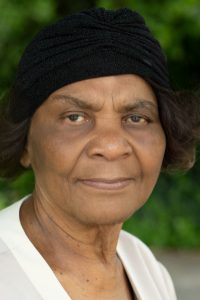
Lola Dunkley
Nurse, NHS · arrived from Jamaica, 1962
Would you like this read to you? Just press play below.
Lola Winsome Dunkley, née Banton, was born on 14 January 1944 in Old Harbour, Saint Catherine, Jamaica. She grew up in a large, blended family as one of 18 children fathered by a fisherman, with her mother managing the business side of his work. Her father maintained two relationships: one producing five children and the other, with Lola’s mother, producing thirteen. These arrangements coexisted peacefully within a strong community framework influenced by Pentecostal church values and Jamaican cultural norms. Lola attended Old Harbour Junior School, Old Harbour Secondary School, and Kingsway High School, where she developed a caring disposition, frequently looking after younger siblings an early indication of her future vocation. As a young girl, she aspired to become a police officer, though opportunities for darker-skinned Jamaicans like herself were limited by prevalent colourism. Lighter-skinned individuals often secured commercial roles in urban centres such as Kingston’s King Street, while employment for others was largely confined to bauxite mining, farming, or fishing.
In March 1962, at the age of 18, Lola arrived in England by aeroplane, shortly before Jamaica gained independence on 6 August 1962. She travelled seeking opportunity rather than with a specific plan to enter nursing. Upon landing in London, she expected to be met by family, but communication delays — letters took six weeks — meant no one was there to greet her. An 18-year-old alone in an unfamiliar country, she was welcomed by a Caribbean family from Southall who had been on the same flight. A week later, her aunt, Mrs Martin, collected her and took her to Dudley to begin her new life. The transition brought immediate cultural shock: outdoor toilets, coal fires for heating, and a reserved English population that often crossed the street to avoid her. Signs reading “No Blacks, No Irish, No Dogs” were a common and painful sight, leaving a lasting impression of prejudice that she later felt should be acknowledged through compensation for those affected.
Lola began her nursing career in Evesham, where she trained as a State Enrolled Nurse (SEN) under a supportive matron, Mrs Evans, and her husband, the hospital administrator. The environment was welcoming to overseas nurses, with attention given to their welfare and nutrition. Nevertheless, prejudice persisted: some colleagues, including Irish nurses who themselves faced discrimination, made curious or derogatory remarks, touching her skin and hair as if examining something unfamiliar. Lola attributed such behaviour to limited exposure rather than malice, noting that many local people had little experience beyond their immediate surroundings. Her response was consistently kind, guided by the values of respect and love instilled in her Jamaican upbringing and Pentecostal faith, even though she was not yet baptised at that time.
After qualifying as an SEN, Lola undertook midwifery training in Bishop’s Stortford, encountering similar curiosity about her appearance and background. She later moved to Wolverhampton, where she converted her SEN qualification to State Registered Nurse (SRN) status a process that took nearly two decades due to systemic barriers that restricted advancement for Black nurses. During her training and early career, she performed foundational tasks such as making beds, assisting with patient mobility, cleaning dentures, and supporting medication rounds under senior supervision. She participated in study days to develop her skills and contributed to the NHS superannuation pension scheme, receiving a lump sum upon retirement.
Lola’s nursing career combined deep fulfilment with persistent challenges. She found satisfaction in witnessing patient recovery seeing individuals progress from bedbound to walking and returning home. One memorable encounter at New Cross Hospital in Wolverhampton involved an elderly World War II veteran who was initially terrified of Black nurses. Lola sat beside him, held his hand, and reassured him of their shared humanity, transforming his fear into trust and friendship. Another patient, a high-ranking police officer, praised her courtesy, empathy, and competence, remarking that the police force would benefit from someone like her an observation that briefly rekindled her childhood ambition, though systemic prejudice had long made such a path seem unattainable in England.
Throughout her career, Lola encountered a two-tier system within nursing that placed Black nurses in lower grades with fewer increments, bonuses, or promotion prospects. Some patients initially refused her care, only accepting it after growing accustomed to her presence. Despite these inequities, the NHS’s need for nurses had drawn her to England, and she remained committed to providing compassionate, rule-abiding care. Her faith and cultural emphasis on patience and humility helped her navigate adversity, staying “in her lane” until opportunities emerged.
Lola retired in her early sixties. Reflecting on her career, she expressed pride in the care she delivered and the lives she touched, yet acknowledged the toll of prejudice, lower pay, and limited advancement. Her resilience, shaped by her Christian upbringing and Jamaican sense of community, enabled her to earn respect from many colleagues and patients. She maintained a firm belief in divine timing and purpose, viewing her later calling as an evangelist as part of a divine plan revealed years earlier.
At the age of 81, Lola Winsome Dunkley remained a figure of kindness and perseverance. Her journey from rural Jamaica through migration and decades of service in the NHS mirrors the experience of the Windrush generation: confronting overt prejudice, including discriminatory signs and personal hostility, while making an essential contribution to Britain’s healthcare system during a period of critical need. Through compassion, professionalism, and unwavering faith, she exemplified quiet courage and left a legacy of dignified care within the National Health Service.