Heritage stories
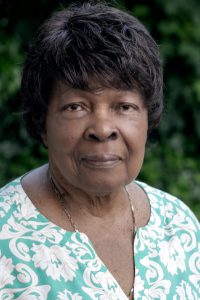
Leonora Williams
Nurse, NHS · arrived from the Kingston, Jamaica in 1960
Would you like this read to you? Just press play below.
Leanora Williams was born on 25 December 1942 in Kingston, Jamaica, the youngest of six children in a devout Christian household. She grew up in a vibrant, community-oriented environment where her mother’s practice of cooking extra meals for elderly neighbours and looking after those in need deeply influenced her values. The family motto “each one help one” became a guiding principle, shaping Leanora’s instinctive compassion and sense of responsibility. As a child she was energetic and adventurous — a self-described tomboy — who spent her days climbing mango and coconut trees, flying kites, playing marbles, and riding bicycles. She attended elementary school until the age of 15 and left formal education at 17 with a clear ambition to become a nurse, inspired by her mother’s example of caring for others. Reflecting on her early years, she recognised that her caring nature had been evident even then: “Compassionate care is part of me. It’s a way of life.”
In June 1960, at nearly 19, Leanora travelled by aeroplane to England, landing at Heathrow after a refuelling stop in Canada. Her two older brothers, who had migrated to Birmingham in 1954, encouraged the move because training opportunities in Jamaica were limited, with long waiting lists at Kingston Public Hospital and the University College of the West Indies. Her mother, concerned for her safety, preferred she travel by plane rather than endure the long sea voyage common during the Windrush era. Collected by her brother in Birmingham, she stayed with a married cousin and was immediately struck by unfamiliar sights: smoke from chimneys leading her to mistake terraced houses for factories, and the surprising sight of a white man cleaning her brother’s minibus. Her first winter brought physical challenges, including chilblains, and a memorable moment when she ran off the ward to catch snowflakes, only to be gently teased by Sister Todd: “Next year you won’t be running out to get the snow, you’ll be running away from it.”
Leanora began her nursing training at Selly Oak Hospital in Birmingham on 29 August 1960. She achieved an impressive 98% on the hospital’s educational test and enrolled in a two-year State Enrolled Nurse (SEN) programme. Her tutor privately encouraged her to pursue the three-year State Registered Nurse (SRN) course, recognising her ability, and she later followed this advice. Training involved hands-on patient care — feeding, bathing, hygiene tasks, and even cleaning dentures — which she initially found unpleasant but accepted out of pity for elderly patients unable to manage themselves. Living in the hospital’s nursing home, she formed close bonds with colleagues, particularly Irish nurses, sharing music and dancing in the basement as a rare form of recreation under strict rules.
After qualifying as an SRN, Leanora worked as a staff nurse on a medical ward at Selly Oak for two years before pursuing midwifery. She completed Part One at Sorrento Hospital and Part Two at Good Hope Hospital’s Maternity Unit, qualifying as a midwife on 17 March 1966. Midwifery became her true passion: she cherished comforting labouring mothers, mopping their brows, making them laugh to ease pain, and hearing the first cry of a newborn. In 1973 she joined New Cross Hospital in Wolverhampton, where she spent 15 years as a sister on the neonatal unit. Despite initial resistance from a senior nursing officer who claimed she was “not ready,” strong references and determination secured the role. The divisional nursing officer noted the exceptional quality of her supporting documents.
Throughout her career, Leanora encountered overt racism. During her first unsupervised delivery at Oakhurst Maternity Unit, a patient refused care from a “blackie.” Supported by her ward sister and doctor, she delivered a healthy baby boy. Three months later the same mother proudly showed her the child in a carrycot, saying, “There’s your son.” Leanora responded calmly: “He’s gorgeous, but we don’t choose our skin colour.” At New Cross, a nursing officer once shook keys in her face without introduction; Leanora firmly reminded her of basic courtesy and secured her sister position regardless. Her Christian faith and the principle of “each one help one” sustained her: she remained in control, never responding with hostility, and focused on delivering dignified care.
Beyond nursing, Leanora was an ordained minister who officiated at community events, including the funeral of a Wolverhampton amateur boxer an occasion that surprised colleagues when reported in the local newspaper. Her faith guided her wider service; after forced retirement due to spinal decompression surgery, she played a key role in founding the Ettingshall Village Community Centre (EVCAP), collaborating with Bilston College for 12 years to create a valuable community resource. This work echoed her mother’s generosity and her own lifelong commitment to helping others.
At the age of 83 in 2025, Leanora reflected on a career that spanned decades in the NHS with no regrets. She described nursing as a calling: “I have chosen one of the best professions, which helps you to care for each other, to support and give comfort to those who are in need.” The highlight remained hearing a baby cry after delivery. Despite cultural shock, prejudice, and physical challenges, she affirmed she would choose the same path again. Her journey from a spirited child in Kingston to a respected midwife and neonatal sister in Wolverhampton exemplifies the resilience, compassion, and dedication of many Caribbean nurses who joined the NHS during the Windrush era. Guided by faith, family values, and an unshakeable belief in “each one help one,” Leanora left a lasting legacy in patient care, community building, and breaking barriers within Britain’s health service.