
Heritage stories
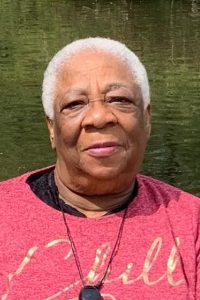
Joyce Thompson
Nurse, NHS · arrived from Jamaica 1956
Would you like this read to you? Just press play below.
Joyce Thompson was born in 1938 in Jamaica. From an early age around eight or nine she considered herself a caring person and aspired to become a teacher. She often looked after her dolls and other children in her community, placing herself in charge, and admired her teachers, Sister Walker and Sister Francis, as role models. Her childhood fostered a natural inclination towards care and responsibility. However, her mother, like many parents at the time, decided that nursing offered the most accessible opportunity for young women migrating to England. Although it was not her original ambition, Joyce accepted the path, recognising that her caring nature made it a suitable fit.
In 1956, just before her 18th birthday, Joyce travelled to the United Kingdom to train as a nurse, arriving as part of the Windrush generation recruited to help build the newly formed National Health Service. She was invited to train at Wanstead Hospital in East London, where she began her programme for Registered General Nurse (RGN) status. At the time she had qualifications equivalent to five O-levels, earned through a scholarship that enabled her to attend Caron Hall, a boarding school in St Mary, Jamaica. Her parents, who ran a small shop and engaged in farming, paid for her flight costing around £80–£90 a significant sum that reflected their determination to secure her future. Concerned for her safety, they ensured she travelled by aeroplane rather than by ship.
Upon arriving in London, Joyce was first received by family in Birmingham—her father and her newly married elder sister—where she stayed from July to September before moving to Wanstead to begin her training. Living in hospital nursing accommodation provided her with a private room while sharing other facilities. As one of very few Black student nurses in a predominantly white institution, she encountered ignorance and prejudice. Fellow students asked absurd questions, such as whether people in Jamaica lived in trees, and patients posed intrusive queries about her skin colour. She responded assertively and with humour, refusing to accept belittlement. Outside the hospital, she was aware of signs reading “No Blacks, No Dogs, No Irish,” which made renting difficult, though hospital accommodation alleviated this during training.
Joyce began her RGN training at Wanstead Hospital but did not complete it initially. She became pregnant, left the programme, and worked for a time as a telephonist for the Ministry of Defence. Drawn back to caring roles, she later retrained in psychiatric nursing at Claybury Hospital in Woodford Bridge, London, completing a three-year programme to become a registered psychiatric nurse. This experience deepened her interest in human behaviour and mental health, leading her to pursue counselling. She earned a Diploma in Counselling, taught counselling skills, completed a full counselling course, and obtained a degree in counselling from the University of Surrey, alongside a Postgraduate Certificate in the Education of Adults (PGCEA). She later pursued a Master’s degree and became Chair and course developer for a counselling programme designed specifically for Black people, one of the few of its kind.
Joyce served as Director of Counselling at London Lighthouse during the AIDS crisis and co-authored a chapter on counselling racial issues for The Handbook of Counselling. She published through the British Psychological Society, teaching psychology to nurses, and became Chair of the British Society of Counselling’s Race Equality division, advocating for inclusion and equity in the profession. She trained hundreds, possibly thousands, across the UK and Caribbean through seminars and courses linked to the University of the West Indies. Her contributions earned a Lifetime Achievement Award and Fellowship of Counselling and Supervision.
Joyce’s career reflected the dual impact of systemic barriers and personal determination. She noted the scarcity of Black professionals reaching senior consultancy levels in the NHS, often due to prejudice and domestic pressures. She remained outspoken, refusing to tolerate injustice, and believed Caribbean cultural emphasis on dignity, cleanliness, and care rooted in her upbringing distinguished her practice. Even in later life, she preferred Black carers for their thoroughness and respect.
At the time of her account, Joyce lived independently in a quiet apartment and remained proud of her contributions. She co-wrote Race, Culture and Counselling, a best-selling book that addressed transcultural issues from a Black perspective when little material existed. Her journey from aspiring teacher in Jamaica to senior tutor, author, and advocate in the NHS and beyond exemplifies the resilience, intellect, and compassion of many Caribbean women who joined the health service during the Windrush era. Despite barriers, she advanced mental health care, counselling, and equity, leaving a legacy of principled service, education, and empowerment within Britain’s healthcare system.