
Heritage stories
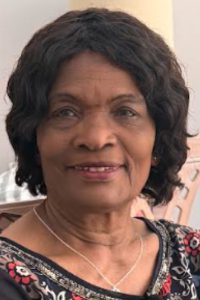
Irene Bromley
Nurse, NHS · arrived from the Jamaica 1964
Would you like this read to you? Just press play below.
Irene Bromley (née Gilchrist) was born on 16 November 1945 in Sandy Bay, Hanover, Jamaica. She grew up in a supportive community, attending local primary and junior schools before progressing to a Catholic school in Montego Bay, St James. Her academic ability earned her a place at Harrison Memorial High School, a private institution run by the Seventh-day Adventist Church, where baptism was a condition of entry. At the age of 15, while living with relatives, she was encouraged by her teachers to pursue further education abroad, as her parents had already migrated to England. Financial difficulties delayed her departure, but at 19 she travelled to join them.
In 1964, Irene left Kingston, Jamaica, flying via New York to Heathrow Airport and arriving in London early on 22 December after an overnight journey. She then travelled to the West Midlands to her family’s home at 137 St Mark’s Road, Chapel Ash, Wolverhampton. The transition was stark: she was unprepared for the cold weather, snow, industrial surroundings, and terraced houses with smoking chimneys, which she initially mistook for factories. The family home had a flooded cellar, and she quickly encountered overt racism in everyday life, including signs reading “No Blacks, No Irish, No Dogs,” being spat at, and avoided on the streets. Despite these hostile conditions, she remained focused on her ambition to train as a nurse and advance her education.
Irene’s initial attempts to enter nursing faced systemic and discriminatory barriers common in the 1960s NHS. She enrolled at Wulfrun College in Wolverhampton to study shorthand and typing while awaiting a nursing place. Applications for office work were subtly rejected, and she sensed unease from all-white staff. She worked briefly at a private school on Penn Road before a short stint at the Royal Eye Infirmary, which she left due to concerns over practices there. Rejection followed at the Royal Hospital despite passing entrance tests, including algebra, with staff citing fears she might leave again. Eventually, she secured a place at Corbett Hospital for a two-year State Enrolled Nurse (SEN) training programme, living in nurses’ accommodation to manage the commute. She observed that Black nurses were frequently directed towards SEN rather than the more prestigious Registered General Nurse (RGN) qualification, highlighting structural inequalities.
During her SEN training at Corbett Hospital, Irene experienced significant racism from patients, who directed insults such as “go back to your country” and references to “climbing banana trees.” She drew strength from the support of a fellow African nurse, Zinniama, and completed her qualification. In 1972, she undertook a six-month course in the Special Care Baby Unit at New Cross Hospital, later moving into postnatal mother-and-baby support as a Senior Enrolled Nurse. Here she felt exploited, often managing wards alone with only an auxiliary assistant, and was unable to perform deliveries despite her skills in monitoring and palpation, due to restrictions placed on non-midwives. Frustrated by dismissive attitudes from midwives, she pursued a conversion course to become an RGN, followed by midwifery training at Wordsley Maternity Hospital to broaden her scope and avoid stagnation.
After midwifery training, Irene faced delays and unfulfilled promises of employment at New Cross Hospital, leading her to work for ten months at Birmingham Women’s Hospital before returning to New Cross, where she remained until her retirement on 30 June 2008. Throughout her 44-year NHS career, she navigated persistent racism from patients and subtle discrimination from colleagues, including midwives who undervalued her input and junior staff who resented her pay grade, sometimes checking her payslips invasively. Despite these challenges, her competence earned respect and progression. She noted gradual improvements in workplace culture by the time of her retirement, though elements of prejudice lingered.
On a personal level, Irene married on 4 November 1972 at St John’s Methodist Church in Wolverhampton. She remained deeply involved in the church, where she was confirmed in 2003, sang in the choir, organised children’s stay-and-play sessions, and contributed to the finance group. Her interests included crocheting, gardening, regular gym attendance, and maintaining close ties with family and friends. She supported her parents through their own experiences of racism in Britain; they returned to Jamaica in 1986. Irene’s resilience extended to her family, and she took pride in her achievements despite the adversities.
Irene Bromley’s career reflects the broader experience of many Jamaican nurses in the post-war NHS: migration to fill labour shortages, entry into the service amid systemic racism and unequal opportunities, and long-term dedication despite exploitation and prejudice. Her contributions spanned neonatal care, postnatal support, and midwifery, touching numerous lives. Reflecting on her journey, she expressed pride in her competence and longevity in the profession, viewing her story as a lesson for her grandchildren and great-grandchildren that goals can be achieved despite racism and negativity. Her legacy combines professional service with community involvement, exemplifying determination and quiet strength in the face of significant barriers.