
Heritage stories
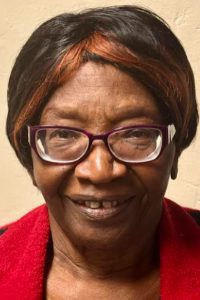
Gurnella Becket
Nurse, NHS · arrived from the Caribbean, 1962
Would you like this read to you? Just press play below.
Gurnella Beckett was born on the 27th of May 1940 in Saint Thomas, Jamaica, the youngest of seven siblings — four sisters and three brothers — in a close-knit Christian family. Raised in the Church of God of Prophecy, her childhood was marked by strong family bonds, with her parents, aunts, and uncles instilling values of faith and kindness. School life in the Jamaican countryside was enjoyable, but she left at the age of 15, finding no immediate job opportunities in the rural area. Instead, she devoted her time to attending church and Sunday school, embracing the simple, spiritual rhythm of island life.
Jamaica, with its beautiful landscapes and self-sustaining agriculture, was a place of natural abundance for Gurnella. Her family cultivated their own food without chemicals or sprays, relying on the rich soil. However, economic challenges loomed large; jobs were scarce, prompting many to seek better prospects abroad. In 1960, her husband travelled to the United Kingdom, part of the wave of migration during the Windrush era, when the British government encouraged workers from the Caribbean to help rebuild post-war Britain. Gurnella followed in October 1962, flying by aeroplane to reunite with him, her primary motivation being the longing to be with her spouse.
Arriving in England was a profound culture shock. Driving through the unfamiliar streets, she marvelled at how different it was from her tropical homeland. One vivid memory was waking to see the backyard blanketed in snow, a sight so alien that she screamed in terror, convinced it signalled the arrival of divine judgement. Food was another adjustment; Caribbean staples were not readily available in markets, and she deeply missed the fresh, unsprayed produce from home. Entertainment was limited, as she focused on raising her young family eight children in total, four born in Jamaica and four in the UK while her husband worked. They maintained their faith, attending the Church of God of Prophecy regularly every Sunday, and even the grandparents in Jamaica had raised the children in a Christian environment.
Gurnella’s first job in the UK was in a factory, operating machines, a common starting point for many immigrants. However, she soon grew dissatisfied and sought something more fulfilling. Drawn to the idea of caring for the sick and suffering, inspired by a compassionate spirit she associated with her Christian upbringing, she joined the National Health Service (NHS) in the 1960s. She had no prior knowledge of nursing from her district in Jamaica, but one of her daughters worked as a carer, sparking conversations that influenced her decision.
Her roles were in care homes for the elderly in Coseley and for people with disabilities in Bilston, where she served as an auxiliary worker for over nine years. She cherished the work, viewing it as a blessing and treating residents as she would her own mum, mindful that she too would one day grow old. Duties included washing, dressing, assisting with toileting, and serving meals like breakfast. She got on well with colleagues a mix of Black and white nurses and reported no significant racism, though she faced isolated abuse from two patients: one punched her in the head while she helped them sit up, and another kicked her in a private area during a toilet transfer. A white domestic worker witnessed the first incident and urged her to retaliate, but Gurnella refused, embodying her caring ethos.
Training opportunities arose, including sessions at New Cross Hospital on topics like responding to heart attacks and basic anatomy, such as the tibia and fibula. She also attended college for further certification in compassionate care. Eager for advancement, she applied to become an auxiliary nurse in the hospital, seeking more experience and potential promotion. However, during the interview, the matron denied her the position upon learning of her eight children, implying she should prioritise home care instead. Undeterred, Gurnella continued her work with dedication, paying into superannuation to secure a pension upon retirement.
Reflecting on her career, Gurnella expressed no regrets. She found the NHS impressive in those early days and would gladly relive her experiences, even pursuing formal nursing training if circumstances allowed. Compassion, to her, meant a loving, caring spirit that extended beyond work; even in retirement, at age 85, she visits the sick in hospitals, care homes, and private residences. Her story is one of resilience, faith, and unwavering commitment to helping others, contributing to the legacy of Jamaican and Afro-Caribbean workers who bolstered the NHS from 1948 onwards.