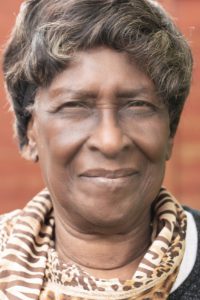

Born Hanover Jamaica, arrived in UK 1961. Nursed in geriatrics and maternity.
Would you like this read to you? Just press play below.
Grethel Gray was born in Hanover, Jamaica, and spent her early childhood in a rural community raised primarily by her grandmother while her mother worked as a domestic helper in Montego Bay. Resources were limited, but Grethel recalled a happy upbringing enriched by strong church involvement and close community relationships. Later, she moved to Kingston to live with her paternal grandfather, alongside her brother and half-sister, before rejoining her mother in Montego Bay at the age of ten. There she contributed to household chores and occasionally assisted her mother at work. Observing her mother’s relentless efforts to support the family instilled in Grethel lasting lessons in hard work, resilience, and determination qualities that would define her later life.
In 1959 Grethel married. Her husband travelled to England in 1960, and she joined him in 1961 at the age of 24, travelling by aeroplane. Arriving in the middle of winter, she encountered snow for the first time and found it alarming, mistaking it for salt and feeling frightened by the large icicles on rooftops. Her husband had advised her to bring warm clothing, and a neighbour who had lived in England kindly provided her with a heavy coat. Like many Caribbean migrants of the period, the couple faced significant housing difficulties, renting rooms from a Black landlady and rotating between rooms due to limited space. Bathroom facilities were often restricted to the landlord’s family, and some landlords offered little consideration to tenants. An Asian neighbour, Mr Singh, provided welcome kindness during this challenging time. After six months of careful saving, Grethel and her husband successfully secured a mortgage from the Staffordshire Building Society without complications a notable achievement that marked an important step toward stability.
Grethel’s husband had arrived in Britain in 1960 on the Empire Windrush, making him part of the initial wave of Caribbean migrants invited to assist with post-war reconstruction. Although Grethel arrived later by plane, she is widely recognised as part of the broader Windrush generation, many of whom entered public services including the NHS. Years later, during the Windrush scandal, she was denied compensation because she had not travelled on the ship itself an outcome she regarded as unjust and continues to speak about.
Grethel’s first employment in England was at Royal Wolverhampton Boarding School, where she undertook cleaning and bed-making duties. She found the work enjoyable until redundancy prompted a change. In 1968 she began nursing training at New Cross Hospital in Wolverhampton, realising a long-held ambition. She worked on geriatric and maternity wards, deriving deep satisfaction from patient care. Racism, however, was a frequent reality: some colleagues and patients treated her poorly, and on one occasion a patient kicked her in the face. Despite such hostility, Grethel remained committed to her role and to providing compassionate care.
In 1971 she gave birth to her fifth child and took a ten-month break from work. Upon returning, she was offered only part-time hours, which she accepted in order to manage family responsibilities, including caring for twins. Unaware at the time of the long-term implications, she later discovered that this arrangement excluded her from the NHS pension scheme. She has since expressed regret over the loss of pension entitlement, viewing it as a consequence of balancing work and family needs rather than a deliberate choice.
Grethel continued nursing from 1968 until her retirement at the age of 70, after which she worked a further five years on the NHS staff bank. Her dedication to the profession was profound; she nursed out of genuine love for the work and consistently placed patients’ needs first, even in the face of prejudice and lack of support from some colleagues.
Reflecting on her career, Grethel holds mixed feelings. She takes pride in the care she delivered and the lives she touched, yet the persistent discrimination, limited institutional support, and financial consequences of her part-time status have left her questioning whether she would choose nursing again. Throughout her life, her mother’s example of strength and perseverance remained a guiding influence.
Grethel Gray’s journey from rural Jamaica through migration and decades of service in the NHS mirrors the experience of thousands of Caribbean women who joined the health service between the late 1940s and the 1980s. Their contributions were essential to the NHS during a period of significant growth and staffing need, yet their sacrifices, including exposure to racism and unequal treatment, were often overlooked. Through her long commitment to patient care, resilience in adversity, and quiet dignity, Grethel has left a meaningful legacy of compassion and service within Britain’s healthcare system.