
Heritage stories
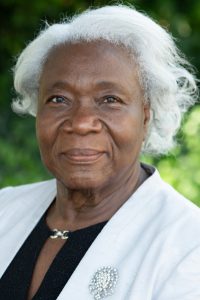
Eppie Mae Haughton
Arrived from Jamaica in 1963, transitioned from auxiliary to mental health nurse
Would you like this read to you? Just press play below.
Eppie Mae Haughton (born 14 August 1948 in Hanover, Jamaica) recounts a life marked by early adversity, family-driven migration, and a prolonged dedication to the National Health Service (NHS), mirroring the paths of many second-generation Windrush migrants who bolstered Britain’s healthcare system amid persistent racism and structural challenges. As one of nine siblings (four girls and five boys), she faced a harsh childhood following her parents’ departure to the UK, leaving her and younger siblings with relatives who enforced exploitative conditions extended chores, scant care, and minimal joy from around age six. Raised in the Presbyterian faith, she attended Brownsville School in Cascade, enduring a two-hour daily walk, while yearning for family reunification. In July 1963, shortly before turning 13, she flew to the UK with siblings Yvonne and Silas, to join her parents in Wolverhampton, evading further mistreatment but encountering barriers to education due to her age.
Upon settling, Eppie entered the workforce at 15, starting in physically demanding factory roles at Crowns and Nail Company Foundry (producing tacks parts), die-casting assembly for tape measures, and Associated Steel and Tool. In the late 1960s, after marrying and moving to Bedford where her daughter was born in 1969, she held various industrial positions before joining the NHS as a ward assistant at North Wing Hospital (now part of Bedford Hospital), managing food preparation and service in ward kitchens. She later shifted to kitchen assistant duties in the main catering department at South Wing, finding purpose in patient support through meal preparation, vegetable handling, and serving. She upheld professionalism and compassion, aided by select colleagues (including a Black head cook, Irene, despite eventual strains) and her evolving Christian faith, transitioning from Presbyterian to the New Testament Church, alongside family-rooted values of empathy.
In 1974, family ties drew her back to Wolverhampton, where she briefly worked for the council as a kitchen assistant and in social services providing home care. She re-entered the NHS through the Alexander Nursing Agency as a bank auxiliary nurse, covering hospitals in Wolverhampton, Birmingham (including Queen Elizabeth and Midland), and surrounding areas. This adaptable position entailed general ward tasks running errands to theatres, laboratories, and blood banks until high blood pressure prompted a move to mental health nursing, which she deemed relatively calmer. By the early 2000s, she obtained permanent roles at Wrekin House (a mental health unit at New Cross Hospital) and subsequently Penn Hospital. Specialising in mental health, she undertook “care and control” responsibilities, such as team-based restraints, while addressing disruptive behaviours including object-throwing, racist verbal abuse, and requests for items. Patients often rejected her help with slurs like “get your black hand off me.”
She personally funded essentials like toiletries for isolated patients and championed equitable treatment, notably defending Black patients from misinterpretations that perpetuated stigma. Ward environments were mixed: some managers were supportive, while others prioritised cliques, restricting her shifts or breaks owing to her advocacy for equality.
A major workplace incident in the mid-2000s drastically changed her trajectory: during a night shift at Penn Hospital, she fell down an unlit stairway while conducting patient checks, resulting in severe injuries — a fractured femur (with later mentions of ankle, foot, and hip damage) and nerve impairment, leading to chronic pain and reduced mobility. Colleagues downplayed the event, providing painkillers rather than emergency care, and follow-up involved purportedly altered accident reports, dismissal of her pain as psychosomatic, and insufficient aid. Lacking adequate sick pay, she endured financial distress, mortgage defaults, and repossession risks. Union support proved erratic, but after dogged legal pursuits rejecting low settlements of £10,000–£20,000 she won an out-of-court £112,000 award. This precipitated ill-health retirement, rendering her disabled and incapable of manual labour; she felt neglected for alternative roles like administration despite her tenure.
At age 77, Eppie conveys profound fondness for her NHS tenure, perceiving patients as kin and deriving joy from empathetic care, stating she would reprise it if possible and advocating empathy with the reminder “that could be your mother or father.” Her account resonates with narratives of Windrush-era and later Black NHS workers, characterised by enduring patient racism (particularly acute in mental health), understated institutional prejudices, intensive workloads, and sporadic deficient handling of injuries. Whilst wider histories chronicle systemic impediments to advancement and bias against Caribbean-origin staff, Eppie’s tale underscores individual fortitude, faith-sustained poise, defence of at-risk patients, and lasting satisfaction in service notwithstanding significant obstacles. Her odyssey from Jamaican childhood trials to committed auxiliary nursing in the Midlands illuminates the understated, ongoing inputs of many in peripheral NHS positions, whilst exposing the personal toll of occupational deficiencies.
A critical review of Eppie Mae Haughton’s perspective on the NHS reveals a narrative of personal triumph and affection amidst adversity, which, while inspirational, may romanticise systemic flaws in ways that align with broader historical accounts of Windrush nurses’ resilience but potentially understate institutional racism’s depth. Her emphasis on joy in compassionate care and willingness to return despite racism and injury reflects a faith-guided dignity common in oral histories of Caribbean migrants, who often framed contributions as familial duty to counter marginalisation. However, this positivity could overlook how such endurance perpetuated exploitation; studies indicate Windrush nurses faced overt discrimination, automatic channelling into lower-status roles like auxiliaries, and barriers to progression, with racism embedded in recruitment and daily interactions. Eppie’s life changed profoundly: migration offered escape from childhood exploitation and industrial jobs, providing purpose in healthcare, financial stability (despite later hardships), and family reunification, but at the cost of cultural dislocation and health impacts. Her impact on the NHS was significant yet undervalued auxiliaries like her sustained mental health services through hands-on care and advocacy, filling gaps in under-resourced areas, though her story highlights unaddressed safety failures and inadequate support, echoing critiques of the NHS’s failure to equitably recognise ethnic minority contributions. Overall, while her perspective inspires, it underscores the need for systemic reform to honour such legacies fully.