
Heritage stories
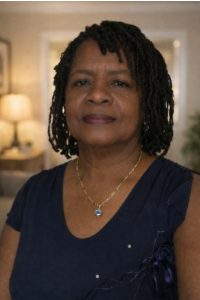
Dezrene Clarke
Nurse, NHS · arrived from the Caribbean, 1961
Would you like this read to you? Just press play below.
Mrs Dezrene Clarke (née Buchanan) was born on 26 December 1947 in Jamaica. She spent her early years in a close-knit family environment, enjoying a happy childhood filled with school, playing with friends and siblings, and simple pleasures such as picking ripe mangoes on the way to and from school. She described life in Jamaica as wonderful, marked by warmth, sunshine, and community.
In 1965, at the age of sixteen and a half, Dezrene travelled alone by aeroplane to England to join her parents, who had migrated three years earlier in 1962. The ticket cost £85, and an air hostess accompanied her during the flight for safety. She arrived in Wolverhampton and later lived in Bilston. Her first impressions of England “were not what she had expected”, “seeing grey skies, cold weather, and thick fog from coal fires”. Industrial landscapes felt alien after Jamaica’s warmth and openness. She recalled getting lost coming home from college one day because of heavy fog and catching the wrong bus, causing her parents great worry. She had imagined England as a place of opportunity and advancement, but the reality was disappointing, and she initially disliked the country intensely and wanted to get back home.
Dezrene continued her education at college after arrival. Inspired by the common path for many young Jamaican women, she applied for nurse training. She began her training as a student nurse, eventually qualifying and working within the National Health Service. She worked on a surgical ward at Wordsley Hospital, where she encountered other Caribbean nurses. The role was demanding, and she faced overt racism during training and throughout her career. During her first aid exam, after submitting her paper, she was made to wait at the back of the queue while others finished, a deliberate act of exclusion by a prejudiced tutor who ignored Black students. When results were announced, the tutor expressed shock that she had passed, shouting across the class, “You of all people, Buchanan!” He later apologised, but the incident left a lasting impression. Her mother was deeply upset by the treatment she received.
As a qualified nurse, Dezrene experienced further prejudice. Some patients refused to speak to her or allow her to touch them, directing racial remarks or demands. In such cases, she would ask another nurse to assist while ensuring patients still received proper care. She noted that Black nurses were rarely acknowledged for their contributions, despite hospitals’ heavy reliance on them. Career progression was difficult: she remained at band C as an enrolled nurse for many years before completing a conversion course to reach band D. Even then, she was overlooked for promotions while others advanced. Matrons frequently left her in charge of the ward, trusting her competence and reliability.
Dezrene worked night shifts to care for her three children during the day while her husband worked. Balancing family and demanding nursing duties was challenging, but she managed with determination. She took pride in her work, caring for patients with dedication even when her efforts went unrecognised. She always missed Jamaica the warmth, people, food, and environment and often wished to return, but she built a life in England over many years.
Dezrene Clarke’s experience reflects the broader journey of many Jamaican nurses in the post-Windrush NHS. Arriving as a teenager in 1965, she faced cultural shock, overt racism in training and practice, and systemic barriers to advancement, yet she remained committed to her role. Her career was marked by hard work, competence, and quiet resilience in the face of prejudice and limited recognition. Through her service on surgical wards and her ability to earn trust from colleagues and patients, she contributed meaningfully to patient care within the health service during a period of significant staffing need. Her story highlights the dedication and strength of Caribbean women who helped sustain the NHS despite significant personal and institutional challenges