
Heritage stories
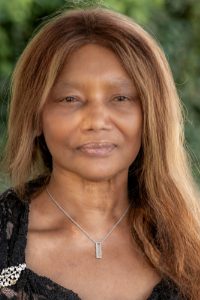
Dalsie Robinson
Nurse, NHS · arrived from the Caribbean, 1967
Would you like this read to you? Just press play below.
Dalsie Robinson was born on 13 February 1956 in Clarendon, Jamaica, her mother’s hometown, though she also spent time in Saint Elizabeth, where her father originated. She experienced a happy home life in Jamaica, supported by her extended family. In her early years, she engaged in play activities such as tending to dolls, simulating nursing care, which foreshadowed her future career. Her parents emigrated to the UK, her father in 1960 and her mother in 1961, leaving her at the age of five with her paternal grandmother, alongside her older brother. Her younger brother and older sister stayed half a mile away with their maternal grandparents. She maintained daily contact with her siblings, and the separation was mitigated by the close-knit community and her involvement in the United Brethren Church, where faith provided stability. As a child, she was shy, quiet, and introspective, often preferring to observe rather than stand out, though she consistently sought to help others. She attended May Penn Primary School, where European teachers encouraged her curiosity. Upon leaving Jamaica, she left behind two older brothers and a sister.
Arrival in the UK
On 25 July 1967, at the age of 11, Dalsie Robinson flew to the UK, wearing a blue dress with a pink bow sent by her mother for identification purposes. She travelled with her two brothers under the supervision of an air hostess, experiencing a combination of excitement and apprehension. Upon arrival in London, she reunited with her mother and later her father, which provided relief, though she found the UK’s colder climate and unfamiliar environment challenging compared to Jamaica. Joining a Baptist Church helped her maintain a sense of continuity with her childhood faith.
Education and Path to Nursing
Her initial schooling in the UK was at St Michael’s, where there were only four Black students, including herself, her brother Latham, Junior and a girl named Pamela. She encountered racism there, such as when white children assigned to mentor her took her pocket money. Following her family’s move to a new house, she transferred to a school in Smethwick, where approximately 30% of the students were Black.
Nursing was not her first aspiration; she initially aimed to become a police officer to assist others. At 18, she was rejected due to her height, prompting her father to advise her to train as a nurse, assuring her of lifelong employment opportunities. She applied for the State Registered Nurse (SRN) course but was informed by a man of colour that she lacked sufficient qualifications and was offered only mental health nursing or the two-year State Enrolled Nurse (SEN) course. She declined these options, noting that Irish and white applicants appeared to be fast-tracked to SRN training. She proceeded with the SEN course, recognising that it would require five years to achieve what others accomplished in three.
Nursing Career
After qualifying as an SEN at Dudley Road Hospital (now City Hospital), she was offered a position on an ear, nose, and throat (ENT) ward, despite lacking specific training in that area. Following consideration and prayer, she accepted the role, which proved beneficial. Under the guidance of Sister Jane, an Irish SRN, she cared for patients who had undergone tracheotomies and laryngectomies. She formed connections with patients, including a 78-year-old named Bill Embery, who gave her a gift of tights. However, she experienced losses, such as the death of a 40-year-old bank manager from a carotid blowout and a 25-year-old father, Michael, from complications related to tonsillitis, which affected her deeply.
After a year, she applied for SRN training but was rejected despite her qualifications. A subsequent nine-month ophthalmology course proved unsatisfactory, as she preferred holistic patient care over specialised focus on eyes. She then joined an agency and worked on Walsall’s elderly care unit, where her ophthalmic training was valued by Sister Gregg, who encouraged her to pursue SRN status. Another rejection from the director of nursing followed, citing the ward’s need for her skills. She returned to college, earning a B in English Literature to strengthen her credentials.
Eventually, she completed a 12-month SRN conversion course. Her theatre training was engaging, involving direct interaction with organs, but she encountered prejudice when a surgeon requested a “regular nurse” instead of her. She returned to the acute elderly care ward as a staff nurse, managing her duties alongside caring for her daughter, Davinia-Ann. Seeking more family-friendly hours, she transferred to the Medical Admissions Unit (MAU), a high-pressure environment. After initial challenges, she adapted and found fulfilment in the role.
Leadership and Innovation
As a junior staff nurse on the MAU, Dalsie observed auxiliary nurses struggling with their NVQ qualifications and student nurses lacking guidance. She developed a teaching plan, including monthly posters and resource folders, to support staff and patients. After 18 months, she was promoted to sister and introduced a display board identifying staff roles by uniform colour, which was a hospital first and remained in use until the unit’s demolition. She also created a laminated booklet, though it was initially credited to the IT department; she successfully advocated for correction.
Dalsie completed an NVQ assessor course, enabling her to mentor and support student nurses on placement and newly qualified staff nurses on the MAU. To address language barriers, she collaborated with an Asian auxiliary nurse to produce a Punjabi communication sheet with phrases such as “Would you like a drink?” This was adopted by other wards, though a student once misattributed it, prompting her to claim ownership. She also authored a 25-page booklet explaining MAU processes, which reduced patient anxiety and complaints during transfers. These initiatives arose from her commitment to improving care amid systemic challenges. She acted as ward manager while on the MAU and briefly taught a pre-nursing course at a local college.
Transition to General Practice
On the MAU, Dalsie worked with a team of five consultants and junior doctors, coordinating admissions, discharges, and daily operations and covering specialists such as cardiology, general medicine, hypertensive and elderly care. Dr Ziggy Ezikwa, one of the senior doctors who worked on MAU made it easier by his planning, strategy and advice ensured smooth coordination of the unit. Following his example, Dalsie was able to put into practice these planning strategies.
Dalsie enjoyed and got satisfied from stabilising patients nursing them back to health, however on one occasion when a member of the nursing team died, Dalsie had to break the news to the other nurses who were on duty. It was devastating, she felt broken, in those days there was no counselling offered to nursing staff.
In 1998, at a friend’s suggestion, she joined a GP practice requiring organisational improvements. She requested and received 24 ring binders, new flooring, and shelves, making an immediate impact. As nurse manager, she balanced roles in secondary care (MAU) and primary care for three years before focusing on primary care under a respected GP. She established protocols, revised procedures, and created safety manuals.
In 2004, she trained as a non-medical prescriber, supported by her GP, allowing her to tailor treatments based on research. She earned a BSc Honours degree, becoming a specialist nurse, and organised flexible clinics during lunchtimes, late afternoons, and Saturdays. Her flu clinic attracted 350 out of 400 registered patients, while obesity and cervical smear clinics provided education and referrals.
As an advanced nurse practitioner, she operated independently and in collaboration with a multi-disciplinary team making clinical decisions, diagnosing undifferentiated and acute conditions, and autonomously assessing, diagnosing, treating and prescribing for patients without medical supervision, she also managed diabetic clinics in collaboration with a diabetology consultant, initiating insulin therapy, updating equipment, and reviewing records. Dalsie also referred patients for imaging e.g., MRI Scans and X-Rays which Dalsie also interpreted. In the GP practice there were over 11,000 patients. Dalsie participated in nurse interviews, and delegated duties while ensuring competency. She was respected by patients, GPs, consultants, and nursing colleagues, with patients often addressing her as “Mrs Robinson.”
Reflections and Legacy
Reflecting on her career, Dalsie expressed satisfaction with nursing, particularly her ENT experience, which fostered her empathy. Rejections and unattributed credits presented challenges, but her faith, rooted in her Jamaican upbringing, sustained her. She frequently relied on reflection and prayer for decisions, guided by her father’s advice especially as her mother and sister were also nurses.
The NHS provided her with purpose, though it involved experiences of racial bias, such as when a consultant mistook a white nurse for her. Her contributions included teaching plans, booklets, communication tools, and clinics that enhanced patient and staff empowerment. Her legacy encompasses the systems she implemented, the trust she earned from patients, and her resilience as a Jamaican immigrant who advanced to a leadership role, supported by her faith and family wisdom.
Dalsie became involved in Educare Foundation (Wolverhampton) and is now the Vice-Chair. In 2021 Dalsie and Geneva who is Secretary of Educare was pivotal in coordinating and organising Precious Memories Dementia Café catering for the needs of people in the community, providing information, Health Checks, Research base information and positive affirmation
She acknowledged the support of her husband Hugo, her children, and her parents throughout her career, and attributed her achievements to divine grace.