
Heritage stories
Birdie Fearon
Nurse, NHS · arrived from the Caribbean, 1961
Would you like this read to you? Just press play below.
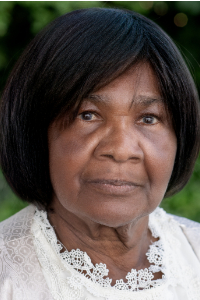
Birdie Fearon (born 27 December 1943 in St Ann’s, Jamaica) offers a reflective and deeply positive account of her long career as an auxiliary nurse in the National Health Service (NHS), spanning more than three decades at the Manor Hospital in Walsall. Her narrative, rooted in strong family values of faith, respect, and service, illustrates the experience of a Caribbean migrant who arrived in England in the early 1960s as part of the broader Windrush generation’s contribution to British healthcare.
Her journey to the NHS began somewhat serendipitously: intended for her sister, the opportunity passed to Birdie when pregnancy prevented the original plan. After an initial period in factory work, encouragement from a friend who was a State Registered Nurse led her to apply to the health service. She joined the Manor Hospital, initially on maternity and children’s wards, where she remained for 34 years two on day shifts and 32 on nights. Night duty, she notes, had its own rhythm, suiting her preference for quieter, focused care during hours when babies arrived and illnesses persisted without regard for time.
As an auxiliary nurse in the 1960s and beyond, Birdie received no formal training; skills were acquired through observation, practical experience, and common sense. Duties involved hands-on care in often understaffed environments, sometimes with only two staff covering a ward. She describes a strong ethos of teamwork, where boundaries blurred mothers assisted with feeding or morale, and everyone contributed as needed. Patients, staff, and doctors formed a supportive, almost familial unit. She witnessed gradual changes in procedures, food systems, and working practices, yet clung to core values of compassion, respect, and pride in her work.
Her tenure was marked by dedication and resilience. A near-fatal accident after a particularly gruelling shift — being struck by a car while crossing the road with a colleague — prompted a personal vow never to feign illness, reinforcing her commitment to honesty. She maintained an impeccable record, free of disciplinary issues, and retired at age 60 with a sense of fulfilment, declaring she would live frugally rather than return. Post-retirement, her caring instinct continued through supporting neighbours, arranging funerals, and informally mentoring new nurses from England and Africa, teaching routines and the human side of the role.
Birdie consciously prioritised family over career advancement, declining opportunities to train as a sister because her children came first, a choice she expresses no regret over. Instead, she found deep satisfaction in direct patient care, particularly welcoming new life on the maternity ward. After retirement, she embraced travel, visiting countries including Australia, Canada, the United States, Portugal, Malta, the Dominican Republic, and returning to Jamaica multiple times, yet her heart remained tied to the wards.
Her account aligns with aspects of the Windrush generation’s legacy, where Caribbean women filled critical nursing shortages in the post-war and expanding NHS, often in maternity, chronic care, or night roles. Many auxiliaries like her learned on the job, faced long hours and staffing pressures, and contributed significantly without formal qualifications or rapid promotion. While broader histories document challenges such as racism, limited progression, and placement in less prestigious areas, Birdie’s experience emphasises supportive teamwork, mutual respect, and personal pride rather than adversity. She portrays her service as a genuine calling, one that brought golden days of real care, heart, and community. Her story underscores the quiet, enduring impact of Caribbean nurses who helped sustain and humanise the NHS over decades, leaving a legacy of kindness and reliability.