
Heritage stories
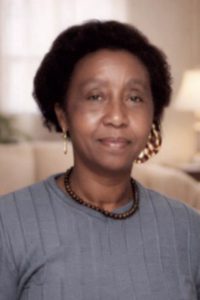
Anetta Lewis
Nurse, NHS · arrived from the Caribbean, 1961
Would you like this read to you? Just press play below.
Anetta Lewis was born on 23 November 1927 in Jamaica. She grew up in a happy family environment, but the death of her father, an engineer, brought financial hardship to the household. Displaying an entrepreneurial spirit from a young age, Anette ran a bar and sold food to the public, demonstrating resourcefulness and a proactive approach to supporting herself and her family.
She migrated to the United Kingdom by aeroplane to join her older brother and sister, who had arrived some years earlier. Her sister was already a trained nurse working within the National Health Service. Anetta was pleased to reunite with her siblings but approached her new life with uncertainty about what to expect. As part of the post-war migration from the Caribbean, she arrived during a period when the NHS actively recruited nurses from the Commonwealth to help rebuild and staff the health service following the Second World War.
Anetta began her nursing career with State Enrolled Nurse (SEN) training at Wordsley Hospital in Dudley, a two-year programme that she completed in 1968. Her sister’s involvement in the NHS influenced her decision to train there, and Anetta held a strong belief in the value of the NHS as the primary provider of healthcare and nurse training in the UK. She qualified successfully and found great satisfaction in her role, despite encountering significant overt racism. Patients and, on occasion, staff directed abusive language and behaviour towards her and other Black Caribbean nurses, including name-calling such as “monkey,” accompanied by monkey noises, and derogatory questions such as “Where is your tail? Let me see,” “Did you live in a tree?” and “Do you sleep in a tree?” Anetta persevered in her duties, focusing on providing compassionate care to those she was responsible for.
Following her qualification, Anetta worked at the Women’s Hospital in Wolverhampton (later known as West Park Hospital) and subsequently at New Cross Hospital. She often undertook night duty to accommodate the needs of her family, preparing meals in the afternoon before leaving for work. During the 1980s, after her husband was made redundant following the closure of the Ever-Ready factory, she supplemented the family income by taking bank nursing shifts in London at weekends. This work took her to prominent hospitals including the Royal London, St Bartholomew’s, and Great Ormond Street. In 1984, she relocated to London and began working at Homerton Hospital in Hackney, where she was well respected by colleagues and medical staff alike.
Anetta met her husband, Geddes Lewis, in 1963 at a house party in Wolverhampton. She qualified as a nurse while raising seven children, balancing demanding shift work with family responsibilities. Her husband often walked her to the bus stop to her night shifts for safety, reflecting the challenges she faced travelling alone at night. Despite these pressures, she maintained a positive outlook and ensured her children were provided for.
Anetta remained deeply committed to nursing throughout her career, valuing the opportunities the NHS afforded her and her family, even though she endured persistent racism. She retired having spent many years in the service and continued to socialise with former nursing colleagues, including attending outings such as nurse days at Ascot. She spoke positively about the NHS and the role it played in her life.
Anetta Lewis died in 2018 at the age of 91. Her son, Walton, who lives in London, has shared her story, highlighting both the joy she found in caring for others and the anguish caused by the prejudice she faced. Her long career exemplifies the dedication and resilience of many Caribbean nurses who contributed to the post-war development of the National Health Service. Despite systemic and interpersonal challenges, she provided compassionate care with commitment and heart, leaving a legacy of service that supported the NHS during a critical period of expansion and change.