
Heritage stories
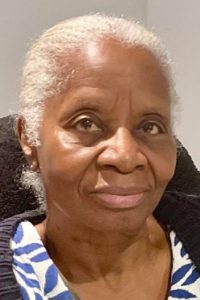
De'Ann Gordon
Mental Health Nurse, NHS · arrived from the Caribbean, 1968
Would you like this read to you? Just press play below.
De’Ann Gordon was born on the tenth of April nineteen fifty-six in Saint Mary, Jamaica, the youngest girl among her mother’s twelve children. She grew up in a large, close-knit family in modest circumstances, surrounded by parents, siblings, and extended relatives. Her father worked as a farmer, while her mother left home early each morning to work as a domestic helper. Despite limited resources, De’Ann described her childhood as joyful and happy. Older sisters helped care for her, braiding her hair and providing daily support, and she spent holidays with wealthier cousins, gaining glimpses of different lifestyles. At school she was spirited and principled, unwilling to accept unfair treatment. At the age of seven, following a dispute at a standpipe where she swore at another child, she was caned by her teacher, Miss Mattar, and required to write lines repeatedly as punishment: “I shall not cuss Rosamund Pike anymore.” The incident reinforced both a lesson in respect and a lifelong determination to stand up for herself and others.
In October nineteen sixty-eight, at the age of twelve, De’Ann travelled alone by BOAC flight to join her eldest sister, who had migrated to England in nineteen sixty and now sought companionship. Excited by stories of England and the prospect of endless “bully beef” — which she mistakenly believed was a British product — she arrived full of anticipation. The reality brought immediate challenges: freezing October weather, unfamiliar food, and a city filled with bakeries that puzzled her. Homesickness was intense; she cried and begged her sister to send her back to Jamaica, but her sister insisted she remain and enrolled her at Saint Peter’s School in the town centre the following week.
School in England proved difficult. Despite her strong academic background from Jamaica, where mathematics and religious education felt like revision, she was placed in a lower stream. Teachers reprimanded her for helping classmates, and the curriculum offered no Caribbean history. With only about six Black pupils in the entire school, she experienced isolation. Opportunities such as sixth form were explicitly denied to Black students. At the age of fifteen, she left school and enrolled in a two-year pre-nursing course at Wulfrun College, motivated by a childhood ambition to become a midwife after observing district nurses delivering babies in Jamaica. To support herself, she worked part-time as an usherette at the Gaumont Cinema and later at Superdrug, Sainsbury’s, and Littlewoods. Relations with her sister became strained, and by seventeen De’Ann was renting her own room, fiercely asserting her independence.
In nineteen seventy-four, having completed her pre-nursing course with good results, De’Ann began training at Barnsley Hall Hospital in Bromsgrove. Although she had always wanted to train as a midwife, opportunities for people of colour were limited at New Cross Hospital, where she later worked. She instead trained in mental health nursing and qualified as a State Enrolled Nurse (SEN). She spent much of her NHS career on geriatric wards for the elderly mentally ill (EMI), rotating between three wards but primarily based on ward B two at New Cross Hospital. She genuinely loved the work, finding deep satisfaction in caring for patients with dementia through patient engagement, conversation, singing, and close observation of their needs, such as monitoring fluid intake by noting how patients held their cups. She emphasised that the best care often occurred on night shifts, which were frequently staffed by Black nurses.
De’Ann encountered racism throughout her career. In one notable incident in the occupational therapy department, Sister Deeley remarked in front of Black student nurses that the room “looked like a jungle.” De’Ann responded immediately: “Well, we must be the monkeys then.” The exchange led to a confrontation with a senior nursing officer, Mr Kennedy, but with the support of a fair-minded colleague, Mr Flynn, she avoided serious disciplinary action. Despite such experiences, she never faced direct abuse from patients — “I’ve never been slapped, abused or anything” — attributing this to her firm yet respectful manner. She worked across mental health, learning disabilities, and adolescent units at hospitals including St Margaret’s and the private Hunter Coombe Hospital. Maternity leave after having her own children prevented her from pursuing midwifery training, an opportunity she later regretted not fighting harder to secure.
De’Ann left the NHS in nineteen ninety-seven for the private sector. In two thousand and nine, together with another health professional, she established her own nursing agency, providing high-quality care to vulnerable people in their own homes, a continuation of the compassionate work she had always valued.
Reflecting on her career, De’Ann expressed no overall regrets about nursing, though she wished she had persevered more strongly for midwifery. She enjoyed the role deeply — “I really enjoy looking after people” — and remained committed to a philosophy of care centred on dignity, close observation of non-verbal cues, and advocacy for patients’ needs. She was critical of practices that withheld comfort or fluids at the end of life, insisting there is “nothing wrong in being compassionate and delivering good care.” Her principle of standing up for fairness — “I have a right to fairness” — guided her from childhood incidents in Jamaica to confronting discrimination in the NHS.
De’Ann Gordon’s journey reflects the broader experience of many Afro-Caribbean nurses who joined the National Health Service between nineteen forty-eight and the nineteen eighties. Arriving as a child in nineteen sixty-eight, she faced cultural shock, educational disadvantage, and institutional racism, yet built a twenty-three-year career marked by dedication, resilience, and genuine compassion. Her story is one of overcoming barriers, maintaining personal integrity, and contributing meaningfully to patient care, leaving a legacy of principled service within Britain’s healthcare system.